|
| |
FLYING LEGENDS
2006
About five miles from where we live is the
Imperial War Museum at Duxford. This houses one of the largest and best
collections of airworthy historic aircraft in Europe. Obviously, a high
percentage are British and American, but several other nationalities are
represented. Their annual `Flying Legends' air display
was held on 8 July this year. David took Charles, and a number of photographs
.....

Charles loved going inside the Catalina, and even
found time to pose for a picture |
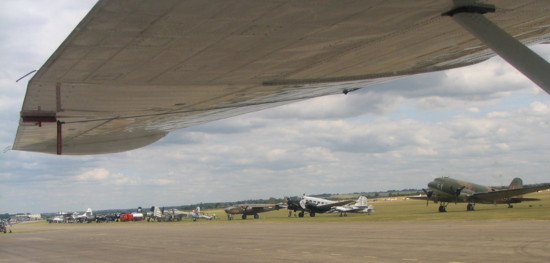
Part of the flight line seen from inside the
Catalina. Aircraft visible include a C-47 (Dakota), Bf109, Junkers
Ju52, B-25 Mitchell, Bucker Jungmann, Skyraider, Sea Fury, Tigercat,
and in the distance the other Catalina. |
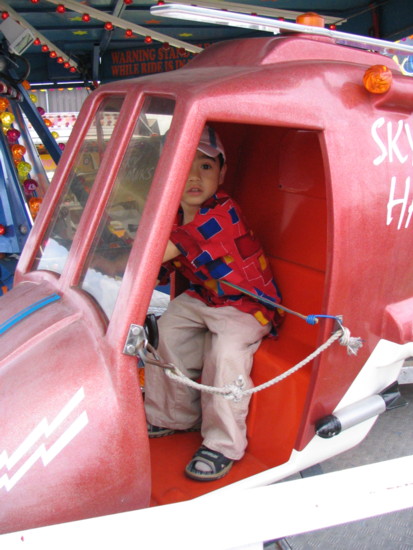
There was a small playground, which Charles
enjoyed as a break from admiring aeroplanes! |
The museum ....
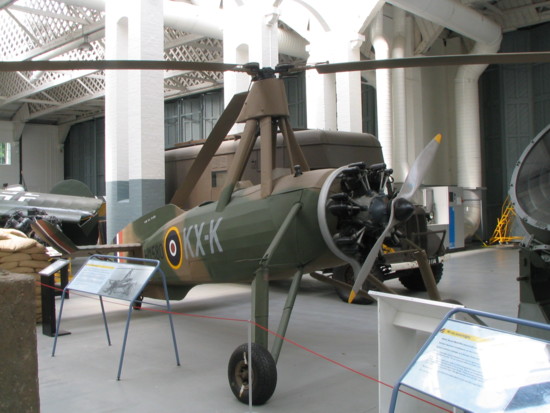
Autogyros came before helicopters. The C-30
was designed by Spanish engineer Juan de la Cierva; several
served with the RAF in the 1930s. |

The De Havilland DH112 Venom was a two-seat
shipborne development of the Vampire series, one of the world's
earliest jets. |
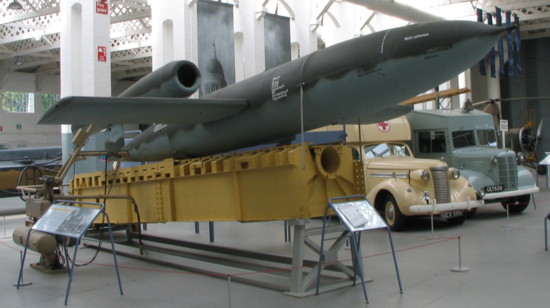
The FZG-76, built by Fiesler (better known
for the Storch light liaison aircraft), was otherwise known as
the Vergeltungswaffe-1 or simply V-1. It was a technically
advanced unmanned aircraft which acted as a flying bomb. Range
was determined by the quantity of fuel carried: when it ran out,
it fell to earth and blew up whatever it happened to land on.
The low pitch buzzing drone of its pulse-jet engine earned it
the nickname of `doodlebug'. |
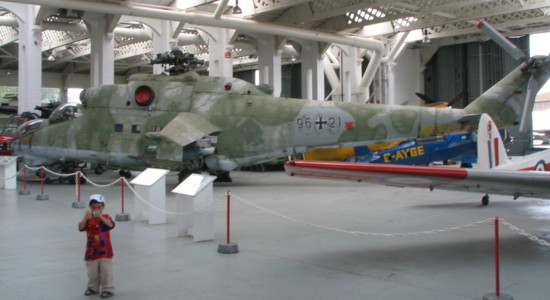
Charles posing in front of a Mil Mi24 Hind,
the huge and potent Russian assault helicopter, in German air
force colours, having been inherited from the former East German
air force on German reunificaiton. |
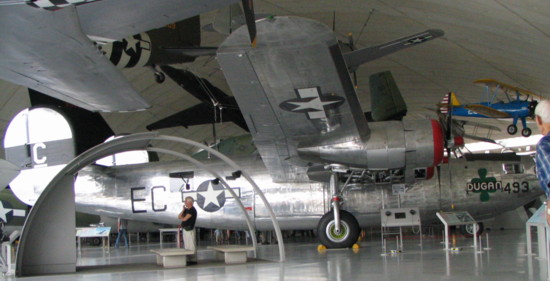
The American Air Force Museum, part of the
Duxford collection, includes this lovely Consolidated B-24
Liberator. Huge numbers of Liberators were built, mostly as
medium bombers, but also as transports, maritime patrol,
reconnaissance and anti-submarine aircraft. |
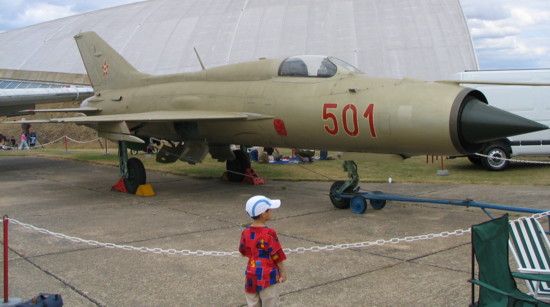
The Mikoyan -Gurevich MiG-21 was the standard
Soviet interceptor fighter for many years, and was an excellent
machine, broadly the equivalent of the American F-4 Phantom. It
certainly impressed Charles! |
The flying display ....

One of the German participants was this
rare Messerschmitt Bf108 Taifun light liaison aircraft from
the 1930s. Willy Messerschmitt went on to design the superb
Bf109 fighter. |

The excellent Junkers ju52 was the
standard German transport aircraft in the second world war.
Though slow, it was very manoeuvrable, and its corrugated
metal skin made it very resilient. |
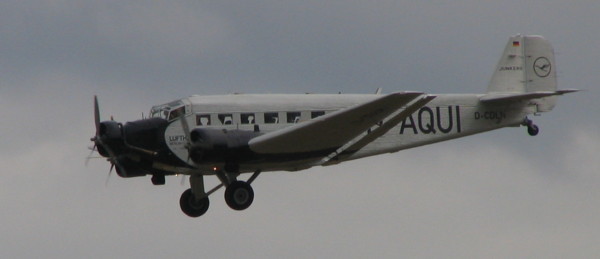
The Ju52 clearly enjoys being in the air.
Not much could ever stop one of these lovely machines from
flying. |
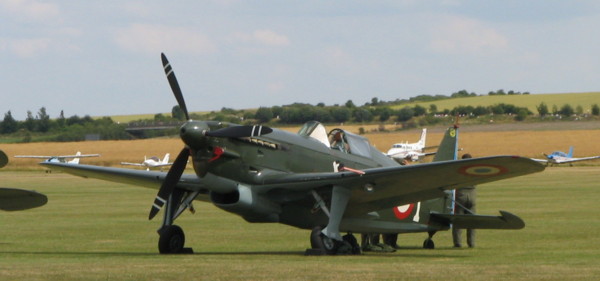
This very rare machine is the only flying
example of a Morane-Saulnier MS-406, one of the most potent
French fighters in 1940. |
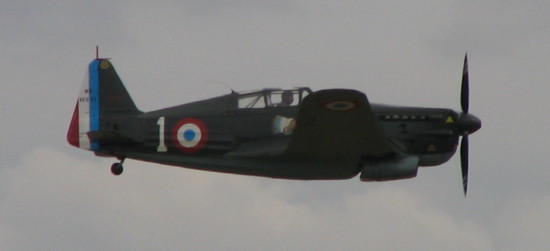
The MS-406 is a stubby little machine,
powered by an 860hp Hispano-Suiza inline engine. The engine
has rather a caustic sound and was reputedly not the most
reliable powerplant in the world. |
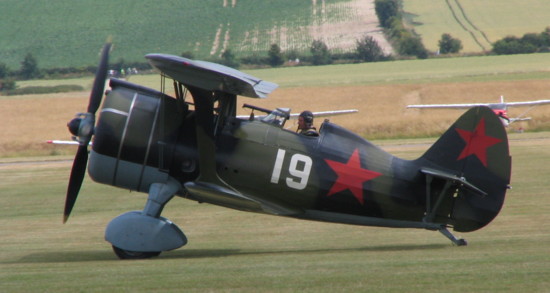
The Polikarpov i-15 might look primitive
for a second world war fighter, but its speed and
manoeuvrability made it very useful in the early stages
until more modern fighters were available to take its place. |
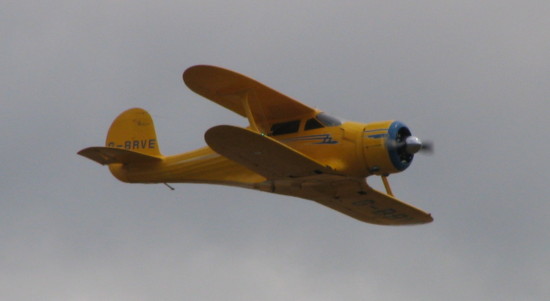
Luxury travel, 1930s style - the Beech 17
Staggerwing. |
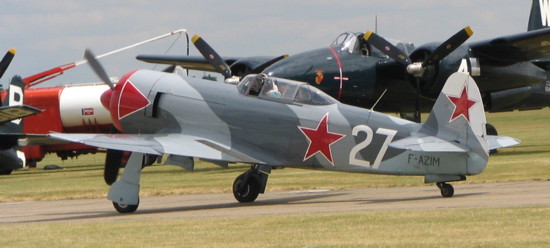
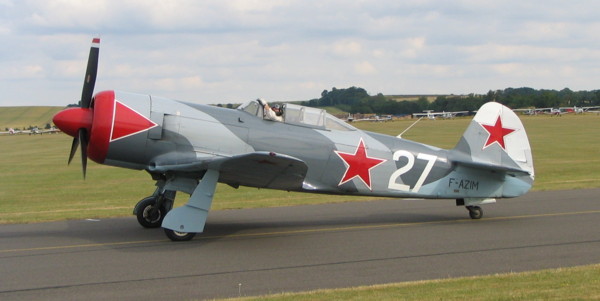
Very rare Yakovlev YAK-3, one of the best
fighters produced by Russia during the war. This one is
based at La Ferte Alais in France. |
 |
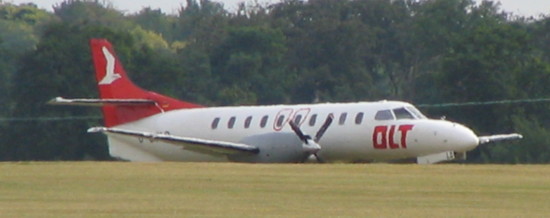
Dozens of people had flown in to the
show from many places in Europe. This Swearingen Metro
had brought a group of enthusiasts from Germany.
|
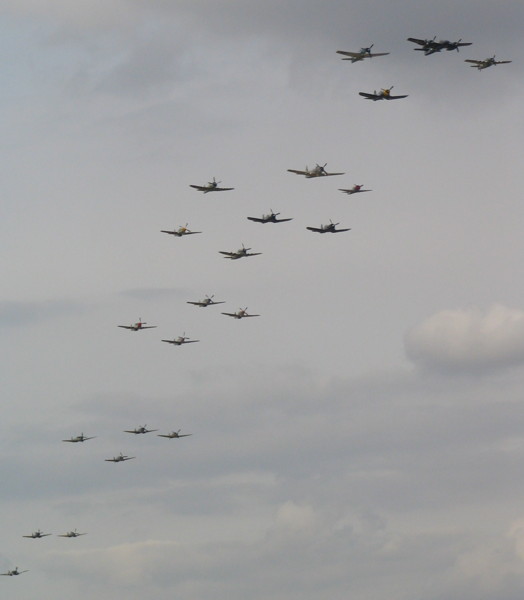
Massed formation of many of the
historic aircraft flying in the display; a magnificent
sight (and sound!) to close the day.
|
British aircraft
American aircraft
Spitfires!!


|