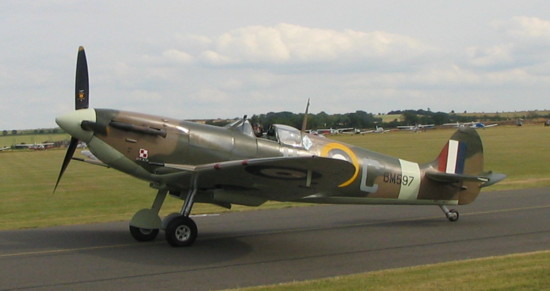
The Mark 5 was the most numerous of all the
Spitfires, with 6,554 eventually made. This is an LF V b, the `b'
denoting the elliptical wing with four 20mm cannon, and the `LF'
denoting `low level fighter'. Note the original three bladed
propellor. |
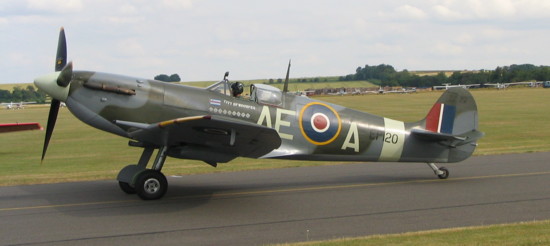
Another Spitfire LF V b, but this one has clipped
wings to improve low altitude performance. |
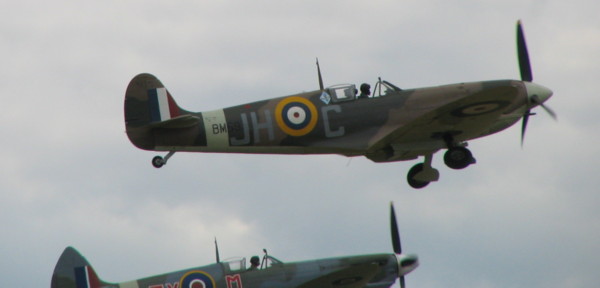
The standard-wing LF Vb taking off, together with
the mark 8. Note the undercarriage retracting outwards - a useful
identification feature; the Hurricane's wheels retracted inwards. |
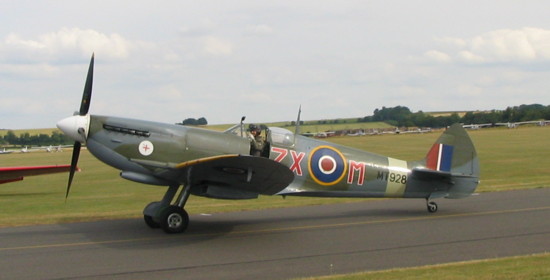
Spitfire VIII, powered by an American-built
Packard Merlin engine. 1,648 of this variant were built. Note the
four bladed propellor now introduced on the more powerful Merlin
engines in this version.
|
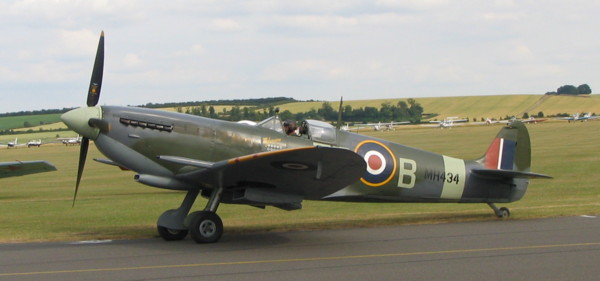
The Spitfire IX was the second most numerous
version built, with 5,736 eventually made. This is a IXb with the
standard elliptical wing, equipped with four 20mm cannon.
|
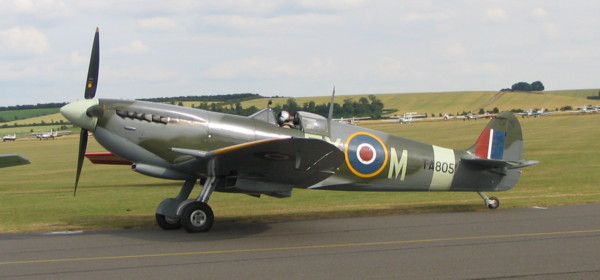
Spitfire HF IX. The `HF' denotes `High altitude
Fighter'.
|
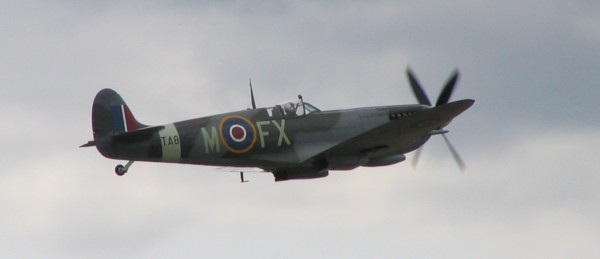
The HF IX in flight
|
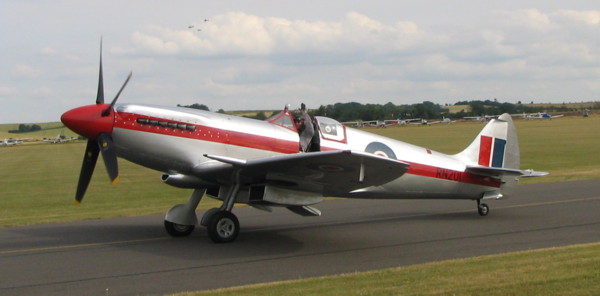
The Spitfire 14 was one of the first to be
equipped with the more powerful Griffon engine and five bladed
propellor. This one is a clipped-wing XIVE, optimised for low level
work. Note the enlarged tail, needed to cope with the extra power of
the Griffon engine. 966 of the mark 14 were built.
|
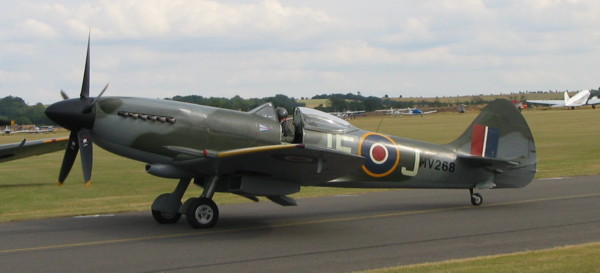
This Spitfire FR XIV was one of the first to
introduce the `teardrop' canopy for better all-round visibility. The
`FR' stands for `Fighter, Reconnaissance'. This one also has the
clipped wing.
|
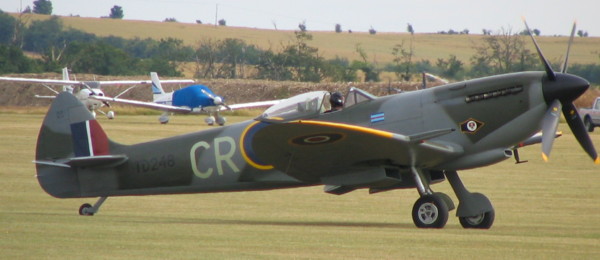
The Spitfire LF XVI was basically a mark 9 with
the American Packard Merlin engine. This one is an LF XVI e, with
bubble canopy and the longer wing. Note reversion to the four blade
propellor for the Merlin.
|
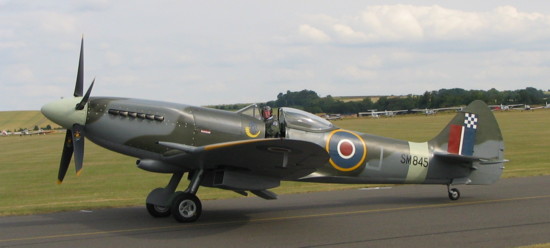
The Spitfire FR XVIII, like the XIV, had a
Griffon engine and bubble canopy. There were only 300 of this
variant made, because it was just too late to serve in the War. This
one has the `original', elliptical, wing.
|
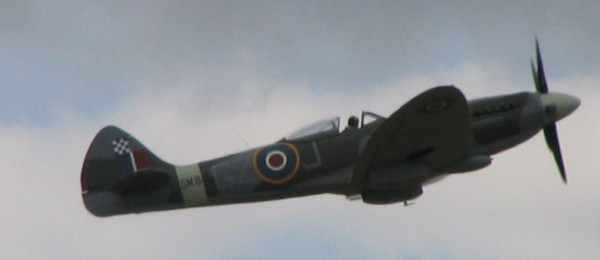
The FR XVIII in flight
|
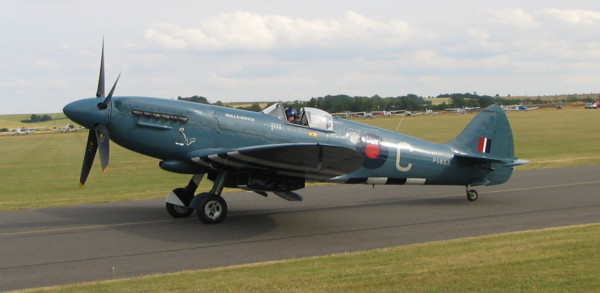
The Spitfire PR XIX was a specialised
photographic reconnaissance version. This one is finished in
standard PR colours, sky blue to make it hard to see when overhead
at high level. The effect is rather altered by the conspicuous black
and white `invasion stripes', designed to make it easier to tell
friend from foe during the heat of battle while supporting the
Normandy landings. |
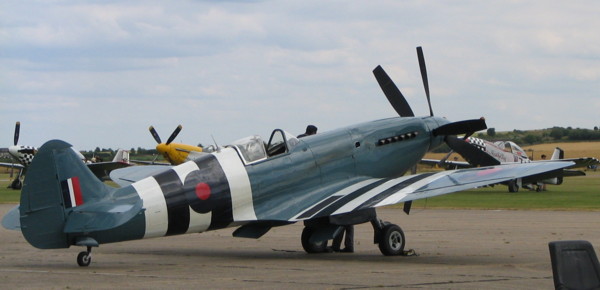
A remarkable ex-post conversion: this PR XIX has
been fitted with a griffon engine taken from an Avro Shackleton,
complete with contra-rotating propellors. This one must be a beauty
to fly, not only massive power but no torque at all. |
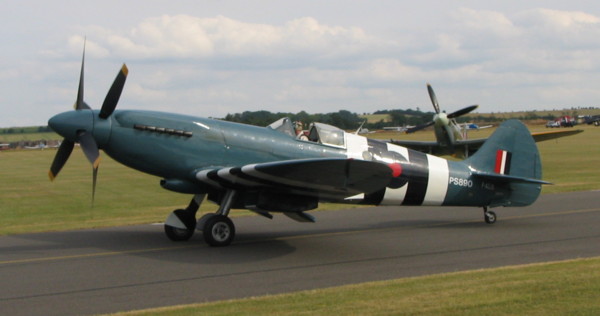
Another view of the PR19 with the contra-rotating
propellors. |
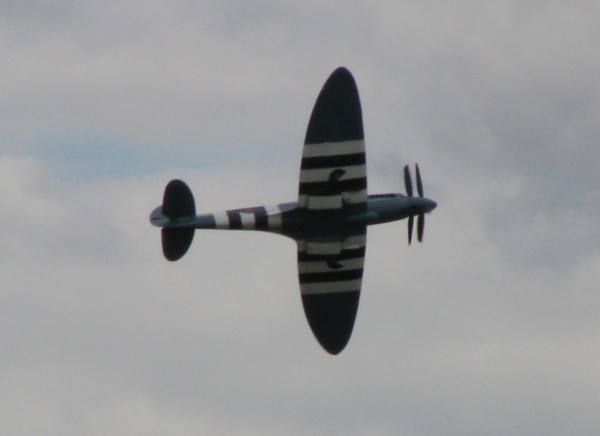
The PR19 C/R in flight, showing off the beauty of
the wing shape and the invasion stripes, as well as the bizarre
propellor. |
Over 20,000 Spitfires were
built - more than any other British aircraft. They were used in all
theatres of war, and continued for many years thereafter. They were
universally loved by their pilots, and continue to inspire
generations today with the example of what can be achieved in the
face of adversity. More and more Spitfires are being restored to
flying condition today. Long may they fly! |
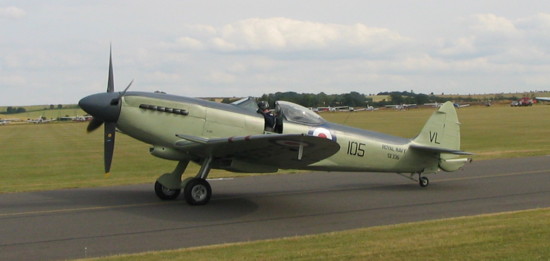
This is a Seafire, which is a Spitfire adapted
with folding wings and an arrestor hook for life on an aircraft
carrier. This one is a Griffon engined Seafire mark 17. |